
Few songs from the late 1960s have maintained the kind of cross-generational grip that Tom Jones’s “Delilah” continues to hold on audiences worldwide. Originally released in 1968, the track became an instant commercial success, climbing to number two on the UK Singles Chart and earning Jones some of his strongest international recognition to date.
Decades later, short clips of the performance continue to attract hundreds of thousands of views, with comment sections filled in multiple languages — a testament to the song’s enduring reach beyond any single era or audience.
Written by Barry Mason and Les Reed, “Delilah” is built around one of the more dramatically charged narratives in mainstream pop of its time. The song follows a man observing his lover through the night, and the story escalates into a moment of irreversible consequence before the narrator pleads for forgiveness.

Mason and Reed had already collaborated with Jones on earlier material, but “Delilah” represented a significant shift in ambition — a full theatrical arc compressed into a three-minute single. The production, arranged with sweeping brass and a building orchestral swell, was designed to showcase Jones’s vocal range at its most commanding.
What set Jones apart as a performer, and what the clip illustrates clearly, is the physical commitment he brought to a song. His baritone voice carried the emotional weight of the lyric without tipping into melodrama, threading the tension of the story through controlled dynamics before releasing it in the chorus.
The final verse — in which the narrator confronts the door about to be broken down and asks for forgiveness — lands with a resignation that gives the song its unusual emotional texture. It is not purely a love song, nor purely a tragedy; it occupies an uncomfortable middle register that Jones navigated with precision.
The audience response to “Delilah” has never entirely faded. The song became a fixture at live performances and sporting events, particularly in Wales, where it was adopted informally as an anthem by rugby fans and crowds at national fixtures.
Jones himself revisited the track repeatedly throughout his touring career, and it remained one of the most requested songs at his concerts well into the 2000s.
The comments on this clip reflect something similar — viewers from Brazil, Germany, France, Romania, and the United States each describing a personal memory or emotional connection to the recording.
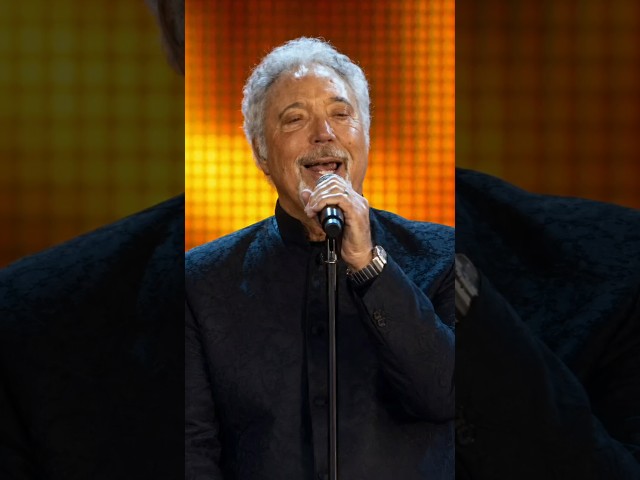
One commenter noted that hearing it brings back childhood memories of their mother’s record player, a response that speaks to how deeply the song embedded itself in domestic life across multiple decades.
“Delilah” stands as a marker of a particular moment in popular music when orchestrated pop and theatrical vocal performance were still the dominant commercial form, before rock fragmented the mainstream in the early 1970s.
Tom Jones, who was born Thomas Jones Woodward in Pontypridd, Wales, in 1940, would go on to reinvent himself multiple times — collaborating with artists across genres from country to electronica — but “Delilah” has remained the song most audiences return to when his name comes up. The full performance captured in this clip is available in the video below.
Watch the full video below